
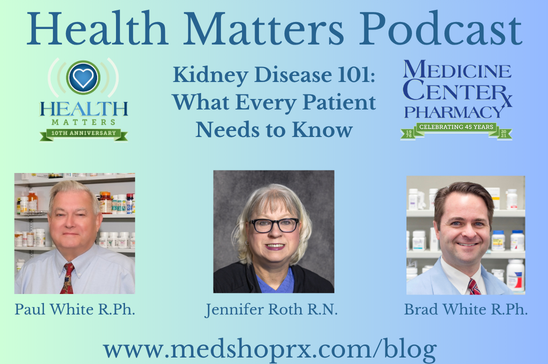
Kidney disease is often called a “silent condition” because many people don’t recognize the signs until it has progressed. On this week’s Health Matters Radio Show and Podcast, pharmacists from Medicine Center Pharmacy welcomed Jennifer Roth, RN, Nurse Executive-Board Certified and Assistant Manager of Dialysis at Aultman Health System, to break down the essentials of kidney health in a way every patient can understand.
Kidney Disease 101: What Every Patient Needs to Know
Kidney disease is often called a “silent condition” because many people don’t recognize the signs until it has progressed. On this week’s Health Matters Radio Show and Podcast, pharmacists from Medicine Center Pharmacy welcomed Jennifer Roth, RN, Nurse Executive-Board Certified and Assistant Manager of Dialysis at Aultman Health System, to break down the essentials of kidney health in a way every patient can understand.
YouTube Livestream Replay Available Here
Why Kidney Health Matters
Your kidneys play a critical role in:
Filtering waste and toxins
Balancing fluids and electrolytes
Regulating blood pressure
Supporting red blood cell production
When kidney function declines, these systems are disrupted—often without obvious early symptoms.
Common Types of Kidney Disease
During the episode, the discussion highlighted two primary categories:
Acute Kidney Injury (AKI): Sudden loss of function, often reversible with prompt treatment
Chronic Kidney Disease (CKD): Gradual decline over time, which can progress to end-stage renal disease (ESRD) if not managed properly
Key Risk Factors Patients Should Know
Understanding risk is the first step toward prevention. The most common contributors include:
Diabetes
High blood pressure
Heart disease
Family history of kidney disease
Certain medications and dehydration
Warning Signs & Diagnosis
Kidney disease can be difficult to detect early, but symptoms may include:
Fatigue and weakness
Swelling in legs or ankles
Changes in urination
Shortness of breath
Diagnosis typically involves:
Blood tests (e.g., creatinine, GFR)
Urine testing
Imaging when needed
Treatment & Management Options
Treatment depends on the stage and type of kidney disease:
Lifestyle changes (diet, hydration, blood pressure control)
Medications to manage underlying conditions
Dialysis for advanced kidney failure
Kidney transplant in select cases
A key takeaway from the discussion: early intervention can slow progression significantly.
Prevention: What Patients Can Do Today
The most practical strategies include:
Maintain healthy blood pressure and blood sugar levels
Stay well hydrated
Follow a kidney-friendly diet (low sodium, balanced protein)
Avoid unnecessary use of NSAIDs and nephrotoxic medications
Get routine screenings, especially if at risk
Final Thought
Kidney disease doesn’t happen overnight—and neither does prevention. The earlier patients understand their risk and take action, the better their long-term outcomes.
As emphasized in this week’s show, education is empowerment. Whether you’re managing a chronic condition or simply want to stay proactive about your health, understanding kidney function is a critical step in protecting your overall well-being.
🎧 Catch the full episode of Health Matters with the Medicine Center Pharmacy on your favorite podcast app or at medshoprx.com to learn more about kidney health and patient-focused care.
Listen to the episode on Apple Podcasts, Spotify, Castro, Stitcher, Amazon Music, or on your favorite podcast platform.
Thanks for listening today! We’d like to remind our listeners, if you suspect you have a medical issue, please contact your healthcare provider. Thanks to our sponsor Aultman Health System. As always, we thank our listeners for joining us on Health Matters with the Medicine Center Pharmacy. Have a healthy week and we’ll see you again next Friday right here on News Talk 1480 WHBC.