Posts tagged healthmatters
Colorectal Cancer Screening: Why Early Detection Can Save Your Life

March is Colorectal Cancer Awareness Month, a national effort focused on increasing screening rates and educating patients about prevention and early detection.

On a recent episode of the Health Matters Radio Show and Podcast, pharmacists Paul White and Brad White of Medicine Center Pharmacy spoke with Dr. Marta Lavery of Aultman General Surgery about colorectal cancer risk, screening options, and why early detection is so important. 

Colorectal cancer is currently the third-leading cause of cancer-related deaths in the United States, yet it is also one of the most preventable and treatable cancers when detected early

Understanding your screening options and knowing the warning signs can make a life-saving difference.

What Is Colorectal Cancer?

Colorectal cancer refers to cancer that develops in the colon or rectum, which are parts of the large intestine.

Most colorectal cancers begin as small growths called polyps that form on the inner lining of the colon. Over time, some polyps can develop into cancer.

Important facts about colorectal cancer

  • Often develops slowly over several years

  • Typically begins as non-cancerous polyps

  • Early detection allows doctors to remove polyps before cancer forms

This is why routine screening is the most powerful prevention tool available.

When Should You Start Colonoscopy Screening?

Recent medical guidelines have lowered the recommended age for screening.

Current colorectal cancer screening recommendations

  • Begin screening at age 45 for average-risk adults

  • Earlier screening may be recommended for high-risk individuals

The screening age was lowered because physicians have observed an increase in colorectal cancer among younger adults.

People at higher risk include those with:

  • Family history of colon or rectal cancer

  • Personal history of colon polyps

  • Inflammatory bowel diseases such as Crohn’s disease or ulcerative colitis

  • Certain inherited genetic conditions

If you have any of these risk factors, your doctor may recommend earlier or more frequent screenings.

Colonoscopy vs. Stool-Based Screening Tests

Patients today have several screening options available.

Colonoscopy

A colonoscopy allows physicians to examine the entire colon using a flexible camera.

Benefits include:

  • Direct visualization of the colon

  • Detection of abnormal tissue

  • Immediate removal of polyps during the procedure

Because it can both detect and prevent cancer, colonoscopy is considered the gold standard for colorectal cancer screening.

Stool-Based Tests (such as Cologuard)

Stool-based tests check for blood or abnormal DNA markers that may indicate cancer.

Advantages:

  • Non-invasive

  • Can be done at home

Limitations:

  • A positive result requires follow-up colonoscopy

  • Less sensitive for detecting certain types of polyps

Your physician can help determine which screening option is best for you.

Common Symptoms of Colorectal Cancer

Many people with colorectal cancer have no symptoms in the early stages, which is why screening is so important.

However, symptoms that should never be ignored include:

  • Rectal bleeding

  • Blood in the stool

  • Persistent abdominal pain

  • Changes in bowel habits

  • Unexplained weight loss

  • Iron deficiency anemia

These symptoms do not always mean cancer, but they should be evaluated promptly by a healthcare professional.

Lifestyle Factors That Influence Colon Cancer Risk

Some risk factors cannot be changed, but several modifiable lifestyle habits may reduce your risk.

Steps that may help prevent colorectal cancer

  • Eat a high-fiber diet rich in fruits and vegetables

  • Limit processed and red meats

  • Maintain a healthy body weight

  • Exercise regularly

  • Avoid smoking

  • Limit alcohol consumption

Small lifestyle improvements can make a significant difference in long-term colon health.

How Colorectal Cancer Is Treated

Treatment depends on the stage of the cancer and its location in the colon or rectum.

Common treatments include:

  • Surgery

  • Chemotherapy

  • Radiation therapy

  • Targeted therapy

Advances in minimally invasive surgical techniques have improved recovery times and patient outcomes.

In some cases, surgery may require a temporary or permanent colostomy, depending on the location and extent of the tumor.

Life After Treatment: Follow-Up and Surveillance

Patients who have been treated for colorectal cancer often need ongoing monitoring to ensure the cancer does not return.

Follow-up care may include:

  • Repeat colonoscopies

  • Blood tests

  • Imaging studies

These follow-up visits allow physicians to detect recurrence early and maintain long-term health.

When Should Colonoscopy Screening Stop?

There is no single answer for when colonoscopy screening should stop.

Doctors typically consider:

  • Patient age

  • Overall health

  • Prior screening results

  • Life expectancy

Screening decisions should always be personalized based on a conversation with your physician.

Colorectal Cancer Screening in Stark County

If you are 45 or older, or have symptoms or risk factors, now is the time to speak with your healthcare provider about screening.

Patients in Canton and Stark County can contact Aultman General Surgery to schedule a consultation and learn more about screening options.

Early detection can prevent cancer before it starts.

Listen to the Full Health Matters Podcast

This topic was discussed on the Health Matters Radio Show and Podcast, hosted by pharmacists Paul White and Brad White of Medicine Center Pharmacy


You can listen to the full episode and many others through your favorite podcast app.

Thanks for listening today! We’d like to remind our listeners, if you suspect you have a medical issue, please contact your healthcare provider. Thanks to our sponsor Aultman Health System. As always, we thank our listeners for joining us on Health Matters with the Medicine Center Pharmacy. Have a healthy week and we’ll see you again next Friday right here on News Talk 1480 WHBC.

Inside the Heart’s Electrical System: What Every Patient Should Know

On this week’s Health Matters, pharmacists Paul White and Brad White welcomed Dr. Haider Al Taii of Aultman Deuble Heart & Vascular Hospital Cardiovascular Consultants to discuss disorders of the heart’s electrical system  .

Heart disease is often thought of as a “plumbing problem” — blocked arteries and reduced blood flow.

But many serious heart conditions are actually electrical problems.

Understanding the difference can help you recognize symptoms early and protect your long-term health.

🫀 The Heart Is an Electrical Organ

Your heart beats because of a precisely coordinated electrical signal.

  • The signal starts in the SA node (your heart’s natural pacemaker)

  • It travels through the atria

  • Then down to the ventricles

  • Creating the coordinated contraction we feel as a pulse

When that electrical system misfires, the rhythm becomes abnormal.

These abnormal rhythms are called arrhythmias.

Some are harmless.

Others can increase stroke risk or even become life-threatening.


Atrial Fibrillation (AFib): The Most Common Rhythm Disorder

One of the most discussed electrical disorders is Atrial Fibrillation (AFib).

What is AFib?

AFib occurs when the atria (the upper chambers of the heart) beat chaotically instead of in an organized rhythm.

Instead of a steady “lub-dub,” the heart may:

  • Flutter

  • Race

  • Skip

  • Or feel irregular

Symptoms to Watch For

AFib doesn’t always cause dramatic symptoms.

Some patients feel nothing at all.

Common symptoms include:

  • Palpitations

  • Shortness of breath

  • Fatigue

  • Dizziness

  • Chest discomfort

  • Reduced exercise tolerance

If symptoms are severe — especially chest pain, fainting, or extreme shortness of breath — emergency evaluation is appropriate.

Why AFib Is a Big Deal

AFib increases the risk of stroke.

Because the atria are not squeezing effectively:

  • Blood can pool

  • Clots can form

  • A clot can travel to the brain

That’s why blood thinners are often prescribed.

Why Blood Thinners Matter

Blood thinners (anticoagulants):

  • Reduce clot formation

  • Significantly lower stroke risk

  • Are often lifelong therapy depending on risk factors

If a patient cannot tolerate blood thinners due to bleeding risk, anemia, or frequent falls, alternative strategies may be considered — including device-based options.

Medication adherence is critical.

Missing doses can rapidly increase stroke risk.

Ventricular Tachycardia (VT): A More Dangerous Rhythm

While AFib starts in the upper chambers, Ventricular Tachycardia (VT) starts in the lower chambers.

VT is typically:

  • Faster

  • More unstable

  • Potentially life-threatening

Common causes include:

  • Prior heart attack

  • Scar tissue

  • Cardiomyopathy

  • Structural heart disease

Treatment options may include:

  • Medications

  • Ablation procedures

  • Implantable devices

Pacemakers vs. Defibrillators: What’s the Difference?

Many patients have questions about cardiac devices.

Pacemaker

Used when the heart beats too slowly.

  • Helps maintain a safe minimum heart rate

  • Improves symptoms like fatigue and dizziness

Implantable Cardioverter-Defibrillator (ICD)

Used when there is risk of life-threatening fast rhythms.

  • Detects dangerous rhythms

  • Delivers a shock if needed

  • Can save a life in seconds

Living With a Cardiac Device: Common Questions

Patients frequently ask:

Can I use kitchen appliances like microwaves?

Yes. Modern devices are shielded and safe around standard household appliances.

Can I exercise?

In most cases, yes — with physician guidance. Staying active is important.

Can I fly?

Yes. Travel is generally safe.

Can I get an MRI?

Many newer devices are MRI-compatible, but always confirm with your cardiologist.

Are there restrictions?

Avoid strong magnetic fields and always inform healthcare providers about your device.

Lifestyle Matters More Than You Think

While some rhythm disorders are not preventable, lifestyle still plays a powerful role.

Helpful modifications include:

  • Maintaining a healthy weight

  • Managing blood pressure

  • Limiting alcohol

  • Treating sleep apnea

  • Controlling diabetes

  • Staying physically active


Electrical problems are often influenced by metabolic and structural heart stress.

When Should You Seek Medical Attention?

Seek urgent evaluation if you experience:

  • Fainting

  • Severe chest pain

  • Sustained racing heart

  • Shortness of breath at rest

  • Stroke-like symptoms

Early intervention changes outcomes.

Final Takeaway

The heart is more than a pump.

It’s an electrical system that must fire in perfect sequence thousands of times a day.

If you feel:

  • Irregular beats

  • Unexplained fatigue

  • Racing episodes

  • Or new shortness of breath

Don’t ignore it.

Rhythm disorders are common.

They are treatable.

And early diagnosis can prevent serious complications.

Learn More

Dr. Haider Al Taii practices with Aultman Deuble Heart & Vascular Hospital Cardiovascular Consultants.

To hear the full discussion, listen to this episode of Health Matters with the Medicine Center Pharmacy  .

Thanks for listening today! We’d like to remind our listeners, if you suspect you have a medical issue, please contact your healthcare provider. Thanks to our sponsor Aultman Health System. As always, we thank our listeners for joining us on Health Matters with the Medicine Center Pharmacy. Have a healthy week and we’ll see you again next Friday right here on News Talk 1480 WHBC.

Coronary Artery Disease & Building a Heart-Healthy Lifestyle

Heart disease remains the leading cause of death in the United States—but the good news is that many forms of heart disease are preventable with early detection, medical management, and lifestyle changes.

On this week’s Health Matters Radio Show, we sat down with Mihail T. Paxos, MD, cardiologist at Aultman Deuble Heart and Vascular Hospital, to discuss coronary artery disease (CAD) and what patients can do to protect their heart health.

Watch The YouTube Live Stream Replay Here:

Meet Our Guest: Mihail T. Paxos, MD

Dr. Paxos is a board-certified cardiologist with Cardiovascular Consultants at Aultman, specializing in the diagnosis, prevention, and treatment of cardiovascular disease. His clinical work focuses on helping patients reduce risk factors, manage chronic conditions, and prevent heart attacks before they occur. 


Understanding Coronary Artery Disease (CAD)

Coronary artery disease occurs when plaque builds up inside the coronary arteries, reducing blood flow to the heart muscle. Over time, this narrowing can lead to chest pain (angina), shortness of breath, heart attack, or heart failure.


Who Is at Higher Risk?

Common risk factors include:


  • High cholesterol

  • High blood pressure

  • Diabetes

  • Smoking

  • Family history of heart disease

  • Sedentary lifestyle

  • Poor diet


Both genetics and gender play a role, but lifestyle factors remain some of the most powerful drivers of disease progression.


Medications & Medical Management

Are Statins Important?


Statins are a cornerstone of CAD prevention and treatment. They lower LDL (“bad”) cholesterol and help stabilize plaque, significantly reducing the risk of heart attack and stroke.


Supplements and fish oil are not interchangeable with statins.

While some supplements may support heart health, they do not replace prescription therapy when clinically indicated.


Blood Pressure & Diabetes Matter

Blood pressure control reduces strain on the heart and arteries.

  • Diabetes management is critical—uncontrolled blood sugar accelerates plaque formation and worsens outcomes.


Treating CAD often requires coordinated management of all these conditions together.


Lifestyle Factors That Strongly Impact Heart Health


Smoking

Smoking is one of the most dangerous and modifiable risk factors for CAD. The benefits of quitting begin within days to weeks, with cardiovascular risk continuing to decline over time.

Nutrition

A heart-healthy diet emphasizes:


  • Fruits and vegetables

  • Whole grains

  • Lean proteins

  • Healthy fats (olive oil, nuts, fish)


Watching salt and saturated fat intake helps control blood pressure and cholesterol.

Exercise

Regular physical activity:


  • Improves cholesterol levels

  • Lowers blood pressure

  • Enhances insulin sensitivity

  • Strengthens the heart muscle

Goal:

~150 minutes/week of moderate aerobic activity

  • Strength training 2 days/week

  • Activities can include walking, cycling, swimming, or light resistance work


Other Often-Overlooked Contributors

Dr. Paxos also highlighted the role of:


  • Chronic stress

  • Sleep apnea

  • Excessive alcohol intake

Each can quietly increase cardiovascular risk if left unaddressed.


Recognizing Symptoms of CAD

Common symptoms include:


  • Chest pressure or pain

  • Shortness of breath

  • Fatigue

  • Jaw, neck, shoulder, or arm discomfort

Symptoms can differ between men and women, with women sometimes experiencing more subtle signs like nausea or fatigue.

When to Seek Emergency Care

If symptoms are new, severe, or worsening, especially with chest pain or shortness of breath, go to the ER immediately.


Why Is Snow Shoveling Risky?

Cold temperatures plus sudden exertion can:


  • Spike blood pressure

  • Increase heart workload

  • Trigger heart attacks in at-risk individuals


Patients with known heart disease should use caution—or ask for help.


The Most Important Takeaway


Consistency matters more than perfection.

Small, sustainable changes in diet, movement, medication adherence, and follow-up care can dramatically reduce heart disease risk.


Where Dr. Paxos Practices & How to Learn More

Dr. Paxos sees patients at multiple Aultman locations through Cardiovascular Consultants. Patients can contact his office directly or visit the Aultman Health System website for referrals and additional resources. 


Listen to the Full Episode


🎧 Catch the full Health Matters Radio Show & Podcast episode for deeper insights into heart health, prevention strategies, and patient-focused cardiology care.

Thanks for listening today! We’d like to remind our listeners, if you suspect you have a medical issue, please contact your healthcare provider. Thanks to our sponsor Aultman Health System. As always, we thank our listeners for joining us on Health Matters with the Medicine Center Pharmacy. Have a healthy week and we’ll see you again next Friday right here on News Talk 1480 WHBC.

Breast Care Close to Home: Trusted Resources at the Breast Center at Aultman Hospital

Breast health is a vital part of overall wellness, yet many people are unsure where to turn for trusted screening, diagnosis, and ongoing care. On a recent episode of Health Matters Radio Show & Podcast, we sat down with experts from the Breast Care Center at Aultman Hospital to discuss best practices in breast care and the exceptional resources available right here in Canton, Ohio.  

This conversation was designed to empower patients with knowledge, reduce fear around breast health, and highlight how local, comprehensive care can make a meaningful difference.


🎧 Listen or Watch the Full Conversation

Podcast Audio:

YouTube Live Video:

Why Breast Care Matters

Early detection and personalized care are two of the most important factors in positive breast health outcomes. During the show, our guests emphasized that routine screenings and timely follow-up can save lives — and that access to advanced technology close to home removes barriers many patients face.

Key themes discussed included:

• The importance of regular mammograms

• Understanding personal risk factors

• When to seek additional imaging or consultation

• How education reduces fear and uncertainty

Best Practices in Breast Health

The Breast Center at Aultman Hospital follows evidence-based best practices that prioritize both clinical excellence and the patient experience, including:

Routine Screening

• Age-appropriate mammography

• Risk-based screening recommendations

Advanced Diagnostic Imaging

• 3D mammography

• Breast ultrasound and MRI when indicated

Coordinated, Team-Based Care

• Radiologists, surgeons, oncologists, and navigators working together

• Seamless communication across specialties

Patient Education & Support

• Clear explanations at every step

• Emotional and logistical support for patients and families

A Local Resource You Can Trust

One of the most important takeaways from the episode was this: world-class breast care doesn’t require traveling far from home. The Breast Center at Aultman Hospital offers comprehensive services in a setting that understands the needs of our local community.

Patients benefit from:

• Familiar surroundings

• Shorter wait times

• Continuity of care

• A team deeply invested in the health of Stark County and the surrounding areas

Supporting the Whole Patient

Beyond imaging and treatment, breast care is about compassion, communication, and trust. The discussion highlighted how patient-centered care — listening, education, and empathy — plays a critical role in outcomes and peace of mind.

This philosophy mirrors the broader mission of healthcare providers throughout our community: delivering care that treats people, not just conditions.

Final Thoughts

If you or a loved one have questions about breast health, screening schedules, or next steps, this episode of Health Matters is an excellent place to start. Knowledge is empowering, and having trusted resources close to home makes taking action easier.

Listen to the episode on Apple Podcasts, Spotify, Castro, Stitcher, Amazon Music, or on your favorite podcast platform.

Thanks for listening today! We’d like to remind our listeners, if you suspect you have a medical issue, please contact your healthcare provider. Thanks to our sponsor Aultman Health System.  As always, we thank our listeners for joining us on Health Matters with the Medicine Center Pharmacy. Have a healthy week and we’ll see you again next Friday right here on News Talk 1480 WHBC.

Health Matters Radio: Decrease Your Risk for Cervical Cancer by 60%

This week’s Health Matters radio show and podcast features an important and timely conversation focused on Gynecologic Oncology at Aultman, highlighting advances in care, patient advocacy, and the multidisciplinary support available to women facing complex cancer diagnoses.


Broadcast live on WHBC Radio, this episode brings together clinical expertise and real-world insight to help patients, families, and caregivers better understand gynecologic cancers and the care pathways available locally.


Episode Highlights

In this episode, listeners will learn more about:

  • What Gynecologic Oncology Is

    Understanding cancers of the ovaries, uterus, cervix, vulva, and related reproductive organs.

  • Early Detection & Diagnosis

    Why awareness, screening, and timely referral matter.

  • Comprehensive, Team-Based Care at Aultman

    How surgical oncology, medical oncology, radiation therapy, and supportive services work together.

  • Personalized Treatment Planning

    Tailoring care based on diagnosis, stage, and patient goals.

  • Support Beyond Treatment

    Addressing survivorship, quality of life, and ongoing patient support.

This discussion reinforces Aultman’s commitment to patient-centered, evidence-based cancer care close to home.

Watch & Listen

YouTube (Video Recording):

Podcast Audio:


Why This Conversation Matters

Gynecologic cancers are often misunderstood and under-discussed. Open conversations like this empower women to:


  • Recognize symptoms earlier

  • Advocate for appropriate specialty care

  • Feel supported throughout diagnosis and treatment


Education is a powerful first step toward better outcomes.

Thanks for listening today! We’d like to remind our listeners, if you suspect you have a medical issue, please contact your healthcare provider. Thanks to our sponsor Aultman Health System. As always, we thank our listeners for joining us on Health Matters with the Medicine Center Pharmacy. Have a healthy week and we’ll see you again next Friday right here on News Talk 1480 WHBC.

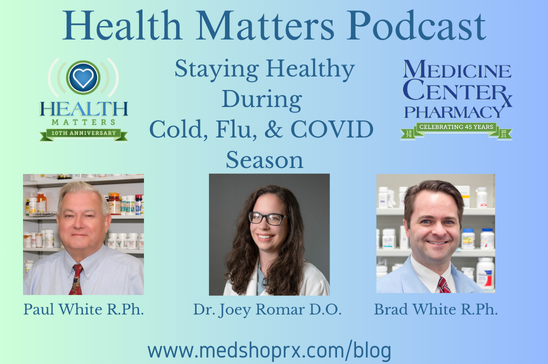
Staying Healthy During Cold, Flu & COVID Season: Expert Insights from Dr. Joey Romar

Cold, flu, and COVID season is here — and this week on Health Matters with the Medicine Center Pharmacy, Paul White and Brad White sat down with Dr. Joey Romar, D.O., of Aultman Orrville Dunlap Family Physicians to discuss what patients need to know to stay healthy, avoid complications, and understand when treatment is necessary.

What Makes Family Medicine Unique?

Family physicians care for all ages and all conditions — from infants to older adults. Because of this, they play a crucial role in managing seasonal illnesses and guiding patients through treatment decisions.

 What Is an Upper Respiratory Infection (URI)?

A URI refers to infections that affect the nose, throat, sinuses, and upper airways, including:

- The common cold

- Influenza

- COVID-19

- Strep throat

Listen To The Podcast:

Watch a Replay of the Livestream:

YouTube Livestream Replay


 Colds vs. Flu vs. Strep — What’s the Difference?

Colds:

- Caused by viruses

- Gradual symptoms: congestion, runny nose, mild cough

- Typically mild

 Influenza:

- Sudden onset

- High fever, chills, fatigue, body aches

 Strep Throat:

- Bacterial (requires antibiotics)

- Sore throat without cough and fever


How to Prevent Flu, COVID, and RSV

- Annual flu vaccination

- Updated COVID vaccination

- Frequent handwashing

- Avoiding sick contacts

- Staying home when symptomatic


When Should You Seek Medical Care?

Call your primary care provider if:

- Symptoms last more than a few days

- Fever persists or worsens

- You develop shortness of breath


Go to the ER if:

- Breathing difficulty occurs

- Chest pain develops

- Severe dehydration is present

 Treatment Options

Viruses:

- Antivirals when appropriate

- Rest, fluids, humidification

- OTC symptom relief


Bacterial Infections:

- Require antibiotic treatment

- Complete full course


Medication Side Effects

Antibiotics:

- GI upset, diarrhea, allergic reactions

 Antivirals:

- Nausea, headache

 OTC Cold Medications:

- Drowsiness, elevated blood pressure, drug interactions


At-Home Testing

At‑home tests are available for:

- COVID-19

- Influenza (select markets)


Medication Safety Tips

- Do NOT take someone else’s medication

- Avoid expired medications


When Should You Stay Home?

Stay home if you have:

- Fever

- Severe cough

- Vomiting

- Significant congestion


What Dr. Romar Wants Patients to Know

URIs are extremely common, but most resolve with rest and supportive care. Not all illnesses require antibiotics, and understanding symptoms helps guide proper treatment.

Thanks for listening today! We’d like to remind our listeners, if you suspect you have a medical issue, please contact your healthcare provider. Thanks to our sponsor Aultman Health System. As always, we thank our listeners for joining us on Health Matters with the Medicine Center Pharmacy. Have a healthy week and we’ll see you again next Friday right here on News Talk 1480 WHBC.

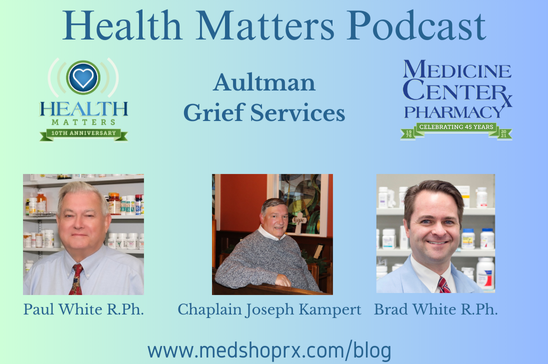
Navigating Grief Through the Holidays: Insights from Chaplain Joseph Kampert

The holidays are often described as the most wonderful time of the year—a season filled with family, traditions, and celebration. But for anyone grieving the loss of a loved one, this time of year can be overwhelming, emotional, and even painful. On a recent episode of Health Matters with the Medicine Center Pharmacy, Chaplain Joseph Kampert from Aultman Health System joined us to discuss how individuals and families can understand, honor, and navigate grief—especially during the holiday season. 

In this blog, we break down the key insights shared during the conversation, along with practical tools you can use to support yourself or someone you love.

Understanding What “Normal” Grief Looks Like

Grief is a deeply personal experience—there is no handbook, no timetable, and no “right way” to feel. According to Chaplain Kampert, typical grief can show up emotionally, mentally, physically, or spiritually. You may experience:

  • Waves of sadness or numbness

  • Trouble concentrating

  • Fatigue or changes in sleep

  • Questions about meaning or faith

  • Moments of joy that feel surprising or uncomfortable

Nothing about grief is linear. It comes and goes—and that’s normal.

Watch a replay of the Live Stream YouTube Live Stream Replay

How the Holidays Intensify Grief

Chaplain Kampert emphasized that the holidays often amplify grief because of:

  • Traditions tied to the person who is gone

  • Expectations for joy and togetherness

  • Memories that surface through music, rituals, and gatherings

  • Social pressure to “be okay”

You may find yourself dreading events you once looked forward to. And that’s okay. Awareness is the first step toward healing.

The Grievers’ Holiday Bill of Rights

One of the most meaningful tools Chaplain Kampert shared is the Grievers’ Holiday Bill of Rights—a reminder that you are allowed to protect your well-being during the season. A few examples include:

  • You have the right to feel whatever you feel—sadness, joy, anger, or all of them at once.

  • You have the right to change traditions or skip activities that don’t feel manageable.

  • You have the right to say no without guilt.

  • You have the right to honor your loved one in your own way.

These rights help create emotional space to heal rather than forcing yourself into environments or expectations that feel overwhelming.

Planning Ahead: Practical Strategies

Grief becomes especially difficult when the holidays “sneak up.” Chaplain Kampert offered several strategies to prepare mentally and emotionally:

1. Create a “So What?” List

This tool helps you quickly release overwhelming thoughts by asking, “If this doesn’t go perfectly… so what?”

It brings perspective when emotions feel heavy.

2. Set Healthy Boundaries

You can protect your emotional energy by choosing which events, conversations, or traditions you engage in. Boundaries may sound like:

  • “I can only stay for a short time.”

  • “I’m choosing a quiet holiday this year.”

  • “I’m skipping this event, but thank you for understanding.”

3. Focus on What You Can Control

You may not control grief triggers or how others behave—but you can control your pace, your environment, and how you care for yourself.

4. Make Space to Honor Your Loved One

This might include:

  • Lighting a candle

  • Sharing stories

  • Making their favorite dish

  • Leaving an open seat at the table

  • Doing an act of kindness in their memory

Rituals create connection and can soften the ache of absence.


Helping Grieving Children Through the Holidays

Children grieve differently than adults—often in “bursts.” Chaplain Kampert shared that caregivers can help by:

  • Keeping communication open

  • Answering questions honestly

  • Allowing them to participate in rituals

  • Maintaining routine where possible

  • Giving reassurance and affection

Children feel grief in more ways than they can verbalize, so patience and presence matter.

Is It OK to Celebrate the Holidays?

Yes—absolutely.

One of the most beautiful insights from the interview was this:

Joy does not dishonor your loved one.

Feeling moments of happiness does not mean you love or miss them any less. Grief and joy can coexist.

Starting New Traditions

If old traditions feel too painful, starting new ones can offer comfort and a sense of direction. New traditions might include:

  • Hosting at a different location

  • Volunteering

  • Traveling

  • Creating a new holiday ritual

  • Celebrating on a different day

New traditions don’t replace your loved one—they simply create space for healing.

When You Feel Stuck

Grief can create periods of deep sadness, numbness, or inertia. Chaplain Kampert encourages reaching out—to a counselor, pastor, trusted friend, or support group. Aultman Grief Services offers free resources, support groups, and guidance for anyone grieving, regardless of where they received medical care.

Supporting a Loved One Who Is Grieving

If someone you love is hurting this holiday season, consider:

  • Asking how you can support them

  • Listening without trying to “fix” their grief

  • Offering help with tasks or invitations without pressure

  • Acknowledging their loss

  • Being present in whatever way they need

Sometimes the most powerful words are:

“I’m here. You’re not alone.”

A Message From Medicine Center Pharmacy

At Medicine Center Pharmacy and MedShopRx.com, we care about the full health of our community—mind, body, and spirit. The holidays can be joyful and heavy at the same time, and we hope these insights from Chaplain Kampert offer comfort, clarity, and encouragement.

If you or someone you love is struggling this season, we encourage you to reach out to Aultman Grief Services or a trusted mental health provider. Healing isn’t linear, but you don’t have to walk through it alone.

Thanks for listening today! We’d like to remind our listeners, if you suspect you have a medical issue, please contact your healthcare provider. Thanks to our sponsor Aultman Health System. As always, we thank our listeners for joining us on Health Matters with the Medicine Center Pharmacy. Have a healthy week and we’ll see you again next Friday right here on News Talk 1480 WHBC.

Support at Every Stage: How Aultman Helps Patients Receive Care at Home

Watch the YouTube Live Replay

On this episode of Health Matters with the Medicine Center Pharmacy, Paul White and Brad White sat down with two special guests from Aultman Health System: Cheri Greenwell from Aultman Health Care in Your Home and Traci Hocking, Director of Hospice & Palliative Care. They joined us during National Care at Home Month to help families better understand the full range of care options available outside the hospital.

Whether you’re caring for an aging parent, recovering from an illness, or navigating a serious diagnosis, understanding these services can make an enormous difference in quality of life.

What Is Home Health Care?

Home health care provides skilled medical support—right in the comfort of your home. Cheri explained that services may include:

  • Nursing visits

  • Physical, occupational, or speech therapy

  • Medication management

  • Wound care

  • Monitoring after hospitalization or surgery

Home health is designed to help patients regain strength, maintain independence, and avoid unnecessary hospital visits.

Who Qualifies for Home Health?

Home health services typically support individuals who:

  • Have a temporary or long-term medical need

  • Are recovering after surgery or hospitalization

  • Have trouble safely leaving home for care

  • Need skilled therapy or nursing oversight

Most home health services are paid for by Medicare, Medicaid, or private insurance, depending on the patient’s needs and eligibility.

How Often Do Providers Visit?

Visit frequency depends on the care plan. Cheri shared that nurses or therapists may visit several times a week, checking vital signs, reviewing medications, and tracking progress. The goal is to help patients improve safely at home while supporting caregivers along the way.

Understanding Palliative Care

Palliative care focuses on improving quality of life for people living with serious illnesses. Traci explained that palliative care:

  • Helps manage pain, symptoms, and stress

  • Supports both patients and families

  • Can be provided at any stage of illness

  • Can be offered alongside curative treatment

It is not limited to end-of-life care—many people receive palliative care for months or even years while continuing their normal treatments.


What Makes Hospice Different?

A common myth is that hospice means “all care stops.” Traci clarified that hospice is actually active, compassionate care focused on comfort, dignity, and support during the final stages of life. Hospice care includes:

  • Symptom and pain management

  • Nursing support

  • Social workers and chaplains

  • Emotional and spiritual care

  • Support for caregivers

  • Bereavement services for families

Hospice care is covered by Medicare, Medicaid, most private insurances, and the Veterans Administration.

Special Services at Aultman Hospice

Traci highlighted several unique aspects of Aultman’s program:

  • A 4-out-of-5-star rating from Medicare

  • Access to specialized programs designed to support patients and families

  • Robust bereavement support following a loss

  • Exceptional collaboration with local providers and caregivers

Families can contact Aultman Hospice directly to ask questions, request information, or make a referral for a loved one.

How to Learn More

  • For hospice or palliative care, Traci encouraged families to reach out directly to Aultman Hospice with questions or referral needs.

  • For home health services, Cheri shared that Aultman Health Care in Your Home is available across our region and can help determine eligibility for service.

At the Medicine Center Pharmacy, we work closely with trusted community partners like Aultman to support the health of local families. If you ever have questions about medications, home health supplies, or caring for a loved one at home, our pharmacists are always here to help.

Thanks for listening today! We’d like to remind our listeners, if you suspect you have a medical issue, please contact your healthcare provider. Thanks to our sponsor Aultman Health System. As always, we thank our listeners for joining us on Health Matters with the Medicine Center Pharmacy. Have a healthy week and we’ll see you again next Friday right here on News Talk 1480 WHBC.

Understanding Medicare’s Annual Election Period: What You Need to Know for 2025

What Is the Annual Election Period (AEP)?

The Annual Election Period (AEP) runs October 15 – December 7 each year. During this window, Medicare Advantage (MA) and Prescription Drug Plan (PDP) members can join, leave, or change plans. New elections generally take effect on January 1. Review your Annual Notice of Change (ANOC) to see updates to your current coverage.

If You Miss AEP

If you miss the AEP deadline, you may still make one change during the Open Enrollment Period (Jan 1 – Mar 31): switch to another MA plan (with or without drug coverage), or disenroll to Original Medicare (Parts A & B) and enroll in a standalone Part D plan. Medicare Supplement enrollees generally must wait unless they qualify for a Special Enrollment or a 5-star plan that accepts year-round enrollment.

Happy With Your Current Plan?

If your plan still fits your needs and remains available, no action is required—you’ll roll over automatically. If your insurer discontinues your plan, you’ll need to choose a new one by December 7.

Why Review Annually

  • Premiums & copays can change.
  • Drug formularies (covered meds & tiers) may be updated.
  • Dental/vision/OTC or other allowances can increase or decrease.

Your health needs evolve—confirm your plan still aligns with your medications and providers.

Medicare Supplement vs. Medicare Advantage

Feature Medicare Supplement Medicare Advantage (MA)
Network Any provider that accepts Medicare Plan network (HMO/PPO/HMO-POS)
Premium Monthly premium required Often $0 or low-cost options
Extra Benefits Generally medical only May include dental, vision, hearing, fitness, OTC
Out-of-Pocket Max No annual cap Annual maximum out-of-pocket (MOOP)

Enrollment across Supplement vs. Advantage is roughly split. MA plans can bundle extra benefits (e.g., dental/vision, gym, meals after inpatient/observation stay) and include an annual out-of-pocket maximum, sometimes with $0 premiums.

PrimeTime Health Plan (HMO-POS) Highlights

  • Broad network including Aultman, all Cleveland Clinic facilities (including Florida), and University Hospitals—50+ hospitals in total.
  • Dental: reimbursed amount up to $1,250.
  • Vision: $0 routine exam + $300 eyewear allowance.
  • Fitness: SilverSneakers® membership included.
  • Post-discharge meals: up to 10 meals after inpatient/observation stay.
  • OTC: up to $400/year allowance.
  • Worldwide: urgent & emergency coverage (copay applies).

PrimeTime Health Plan is an HMO-POS with a Medicare contract; enrollment depends on contract renewal.

Understanding Part D Prescription Coverage (2025–2026)

Part D can be included with an MA plan or purchased standalone with Original Medicare. Due to the Inflation Reduction Act, the former “donut hole” coverage gap has been eliminated. For 2026, the three stages are:

  1. Deductible Stage – you pay 100% until the deductible is met.
  2. Initial Coverage – you pay copays/coinsurance until $2,100 out-of-pocket.
  3. Catastrophic – after $2,100 OOP is reached, covered drugs are paid 100% for the rest of the year.

Formularies and drug tiers vary by plan (e.g., the same medication can be Tier 1 with $0 copay in one plan and Tier 2 with a small copay in another). Some members may qualify for help (VA, Extra Help/LIS, Medicaid), and carriers may offer budget-friendly payment options to spread costs across the year.

Example: Original Medicare vs. PrimeTime HMO-POS

  • Original Medicare has deductibles and 20% coinsurance for many Part B services—and no annual MOOP.
  • PrimeTime HMO-POS uses predictable copays that apply toward an annual MOOP (after which covered services are paid 100% for the remainder of the year).

Why Some Switch from Supplement to Advantage

  • Lower premiums (often $0 MA options)
  • Bundled Part D drug coverage
  • Extra benefits like dental, vision, OTC, meals, fitness
  • Simplified experience with a single plan/ID card

Evaluate network fit, medication coverage, travel needs, and your expected healthcare usage before deciding.


Learn More or Enroll

PrimeTime Health Plan (HMO-POS)

  • Call: 330-363-7407 or 1-800-577-5084 (TTY 711)
  • Website: www.pthp.com
  • Walk-in Hours: Mon–Fri, 8:00 a.m. – 4:30 p.m. (Oct 1–Mar 31: 7 days/week, 8:00 a.m. – 8:00 p.m.)
  • Address: 2600 6th St SW, Canton, OH

You can enroll online at pthp.com or via Medicare.gov, submit a paper form by mail, drop it off at the office, or work through a licensed agent/broker.

Tune In

Join us on Health Matters Radio on Friday, October 24, 2025, for the full conversation with Trisha Witts from PrimeTime Health Plan.

Disclaimers: Plan availability, benefits, premiums, cost-sharing, drug coverage, networks, and MOOP amounts vary by plan and year. Always consult official plan documents and Medicare resources. Enrollment in PrimeTime Health Plan depends on contract renewal.

Watch a replay of our YouTube Livestream here

Thanks for listening today! We’d like to remind our listeners, if you suspect you have a medical issue, please contact your healthcare provider. Thanks to our sponsor Aultman Health System. As always, we thank our listeners for joining us on Health Matters with the Medicine Center Pharmacy. Have a healthy week and we’ll see you again next Friday right here on News Talk 1480 WHBC.

Understanding Counseling and Mental Health: Insights from Aultman’s Stacey Montgomery

On this week’s episode of Health Matters with the Medicine Center Pharmacy, hosts Paul White and Brad White sat down with Stacey Montgomery, Licensed Professional Clinical Counselor (LPCC) with Aultman Medical Group Behavioral Health and Counseling Center, to explore an important topic that touches many lives — mental health and counseling.

The Importance of Mental Health

Watch the archived Livestream!

Mental health is an essential part of overall wellness. Stacey explained that common conditions like anxiety, depression, bipolar disorder, and post-traumatic stress can affect anyone — regardless of age or background. Life stressors, trauma, and ongoing uncertainty can influence how we think, feel, and behave.

“Our mental health affects every part of our lives — relationships, work, sleep, and physical well-being,” Stacey noted.

When to Seek Counseling

Everyone experiences stress or sadness, but when those feelings persist or interfere with daily functioning, counseling can make a significant difference.

Stacey emphasized that therapy isn’t only for times of crisis — it can also help people manage transitions, grief, or relationship challenges.


“If you feel stuck or unable to ‘fix’ things on your own, that’s often a sign to reach out for help.”


What to Expect in Counseling

During a counseling session, individuals can expect a safe, non-judgmental space to talk through their struggles. The first session typically focuses on understanding your history, goals, and what you hope to achieve.

Types of counseling include:

Individual counseling for one-on-one support

  • Group counseling to connect with others facing similar experiences

  • Faith-based counseling for those who want spirituality integrated into their care


Overcoming Stigma

Paul and Brad discussed how stigma often keeps people from seeking help. Many fear being judged or viewed as weak. Stacey encouraged listeners to see counseling as a strength, not a weakness.


“Taking care of your mental health shows courage — it’s no different than seeing your doctor for physical health.”


Friends and family can play a key role by offering support, expressing care, and normalizing the idea that it’s okay to not be okay.

Finding the Right Counselor

Finding the right fit is key. Different counselors have varied specializations — from trauma and grief to anxiety or relationship counseling. A good counselor will create an environment of trust and collaboration.


Moving Forward

Counseling can help individuals gain clarity, perspective, and coping tools to handle life’s challenges more effectively.

The goal isn’t to “fix” someone — it’s to empower them to move forward and live more fully.

Local Mental Health Resources

Aultman Medical Group Behavioral Health and Counseling Center offers outpatient mental health services with licensed professionals dedicated to compassionate care.

To learn more or schedule an appointment, contact your nearest Aultman location or visit aultman.org.

Thanks for listening today! We’d like to remind our listeners, if you suspect you have a medical issue, please contact your healthcare provider. Thanks to our sponsor Aultman Health System. As always, we thank our listeners for joining us on Health Matters with the Medicine Center Pharmacy. Have a healthy week and we’ll see you again next Friday right here on News Talk 1480 WHBC.


Back-to-School Health Checklist: Tips from Nurse Practitioner Jillian Berkshire

As summer winds down and school bells get ready to ring, many parents are busy buying school supplies, picking out first-day outfits, and figuring out schedules. But one of the most important things you can do to set your child up for a healthy and successful school year happens before they even walk through the classroom door — making sure their health is in top shape.


We recently sat down with Jillian Berkshire, APRN-CNP, a School-Based Telehealth Nurse Practitioner at Aultman Orrville Carrollton Health Center, for our Health Matters podcast. Jillian shared expert advice for parents who want to make this school year the healthiest yet. Here are some of her top tips:

1. Don’t Skip the Child Wellness Exam

A child wellness exam isn’t just a quick check-up — it’s a complete assessment of your child’s physical, mental, and developmental health. Jillian recommends annual wellness exams for children of all ages, starting as early as infancy. This visit helps providers track growth, update vaccines, and catch potential issues before they become bigger problems.

2. Stay on Top of Screenings and Vaccines

Before school starts, ask your provider about vision, hearing, and dental check-ups.

  • Vision & Hearing: These screenings are vital for learning. Even mild issues can affect reading, concentration, and confidence.

  • Dental Care: Cavities can cause pain, missed school days, and long-term problems — regular check-ups matter.

  • Vaccines: Immunizations protect your child and their classmates. Your provider can help you stay up to date on which ones are needed for each grade level.


3. Build Healthy Routines Early

Getting into a school-year rhythm ahead of time makes those first mornings smoother. Jillian suggests:


  • Establishing a consistent bedtime and wake-up time a week or two before school starts.

  • Encouraging healthy breakfasts for better focus and energy.

  • Limiting screen time in the evening to help kids wind down.

4. Make Safety a Priority

From walking to the bus stop to carrying a heavy backpack, safety matters:


  • Teach safe travel routes and road safety rules.

  • Choose a backpack that’s not overloaded — ideally less than 10–15% of your child’s body weight.

  • Make sure kids know how to contact you or another trusted adult in case of emergency.

5. Support Healthy Habits All Year Long

  • Homework Success: Create a quiet, distraction-free space for study time.

  • Physical Activity: Encourage daily movement — sports, playground time, or family walks.

  • Hygiene: Remind kids about regular handwashing and other germ-busting habits.

  • When They’re Sick: Keep children home when they’re ill and know your options for medical care, including school-based telehealth or local clinics.

Finding a Primary Care Provider

If your family doesn’t have a primary care provider, Jillian encourages parents to seek one now rather than waiting until a health issue arises. Your provider becomes a partner in your child’s growth and development — and can help you navigate everything from routine check-ups to unexpected illnesses.

Bottom line? Back-to-school prep isn’t just about pencils and backpacks — it’s about making sure your child is healthy, rested, and ready to thrive. By following Jillian Berkshire’s tips, you can help your student start the year strong — and keep that momentum going all year long.

🎧 Listen to the full podcast interview with Jillian Berkshire on our Health Matters podcast for even more practical back-to-school health advice.


Self-Care Isn’t Selfish: Everyday Wellness with Hollie Stefaniak, RN, CRRN

Health Matters with Medicine Center Pharmacy Podcast | Special Guest: Hollie Stefaniak, RN, CRRN – Aultman Woodlawn

In our latest Health Matters podcast episode, we sat down with the wonderful Hollie Stefaniak, RN, CRRN from Aultman Woodlawn to dive deep into something we all need more of—self-care. Whether you’re a busy parent, full-time student, or just someone juggling life’s to-do list, Hollie reminds us that taking care of ourselves isn’t a luxury—it’s a must.

Let’s unpack some of the gems Hollie shared that’ll inspire you to build your own daily wellness flow.

Oxygenation: Breathe Life Into Your Morning

Start your day with intention. Hollie encourages something as simple—and powerful—as deep breathing. Techniques like Wim Hof breathing kickstart your system by increasing oxygen flow, boosting energy, and helping you feel alive before you even sip your coffee.

Hydration: The First Sip Matters

One of Hollie’s go-to tips? Drink water right after waking up. Your body’s been working hard all night. Hydration helps jumpstart digestion, improve brain function, and flush out toxins. Pro tip: keep a glass of water on your nightstand as a reminder.

Need to hydrate like a pro? Especially in the summer or after exercise? Hollie recommends:

- Adding electrolytes
- Infusing your water with citrus or berries
- Carrying a reusable water bottle everywhere

Oil Pulling: A Little Swish Goes a Long Way

Ever tried oil pulling? It’s an ancient detox trick where you swish coconut or sesame oil around your mouth for 5–15 minutes. It may help reduce bacteria, freshen breath, and promote gum health. A little strange at first—but totally worth the glow-up.

Morning Skin Care = Morning Confidence

Self-care is skin-deep too. A gentle morning skincare routine helps protect your skin from daily stress and boosts your confidence to face the day. Sunscreen is non-negotiable.

Stretch & Move: You Deserve to Feel Good in Your Body

You don’t need a gym membership to move your body. A few gentle stretches, a brisk walk, or even a dance party while brushing your teeth all count. Movement gets the blood flowing and clears out the morning fog.

Watch the Livestream Replay Here:

Watch the Live Stream Replay Here

Sip Your Way to Wellness

Herbal teas like ginger, turmeric, or chamomile offer a calming ritual and come with anti-inflammatory benefits. Hollie reminds us that even your choice of beverage can be an act of nourishment and care.

Inflammation: The Silent Saboteur

Inflammation is your body’s response to stress or injury—but chronic inflammation can lead to fatigue, pain, and disease. Hollie suggests:

- Eating more whole foods like leafy greens, berries, and omega-3s
- Cutting down on sugar and processed snacks
- Staying active and managing stress

Grounding: Get Outside & Reconnect

Stressed out? Touch grass. Literally. Grounding—walking barefoot on natural surfaces—helps calm your nervous system, improve sleep, and boost mood. Even a few deep breaths in nature can help.

Managing Stress: Real-Life Tricks that Work

Stress is sneaky, but Hollie’s toolbox is full of easy solutions:
- Breathwork and mindfulness
- Journaling
- Taking breaks to reset
- Saying “no” when needed (yes, that’s self-care too)

Wind Down with a Nighttime Ritual

Create a cozy wind-down routine: a warm bath, a good book, a gratitude list. Shut down screens, dim the lights, and signal to your brain—it’s time to rest.

Sleep: The Unsung Hero of Self-Care

Sleep is where the magic happens. It’s how we repair, reset, and recharge. Hollie suggests aiming for consistent bedtimes, limiting caffeine late in the day, and keeping your bedroom cool and screen-free.

Connecting the Dots: A Daily Flow

Self-care isn’t about adding pressure—it’s about creating rhythm. From your first breath in the morning to the final sigh at night, each habit connects like puzzle pieces to help you feel more energized, focused, and peaceful.

Hollie’s Final Pep Talk

Start small. Choose one new habit and build from there. You don’t need to overhaul your life overnight—just show up for yourself a little more each day. You’re worth the effort.

Listen in to this inspiring conversation with Hollie Stefaniak on the Health Matters Podcast – streaming now wherever you get your podcasts!

Stay tuned to www.medshoprx.com/blog for more health tips, product insights, and real-life wellness stories you can actually use.

Listen to the Podcast Here:

Men’s Health Matters: A Conversation with Dr. J. Evan Devillier on Prioritizing Wellness for Men

June is Men’s Health Month, and it’s the perfect time to shine a light on a topic that doesn’t get talked about nearly enough — taking care of men’s health before problems arise. On our latest Health Matters podcast, we sat down with Dr. J. Evan Devillier of Aultman Alliance Family Medicine for a real, relatable conversation on what men need to know (and do!) to stay well for the long haul.


As your hosts — Paul White, R.Ph. and Brad White, R.Ph. of the Medicine Center Pharmacy — we’re passionate about helping men take control of their health. Whether it’s preventing heart disease or optimizing hormones, we believe education is the first step. This podcast episode was packed with helpful info, so let’s break down the highlights! 👇

Why Annual Wellness Exams Are Non-Negotiable

Dr. Devillier emphasized that many men put off regular checkups — often until something goes wrong. But an annual wellness exam is your chance to get ahead of issues like high blood pressure, cholesterol, diabetes, or even prostate problems.


He recommends that men begin yearly exams in their 30s or earlier if they have risk factors like a family history of heart disease, diabetes, or cancer.


“We want to catch small problems before they become big ones,” says Dr. Devillier.

Top Health Concerns for Men

Here are a few issues men need to keep on their radar:

  • Heart Disease: The #1 killer of men — often preventable with lifestyle changes and screening.

  • Hypertension & High Cholesterol: Both silent threats. Dr. Devillier shared how routine labs and blood pressure checks are key to early detection.

  • Obesity & Diabetes: Linked to numerous chronic illnesses, yet manageable with the right support.

  • Prostate Health: Watch for urinary changes, and ask your provider about PSA testing.

  • Mental Health: Depression and anxiety often go undiagnosed in men. “Mental wellness is just as important as physical health,” Dr. Devillier reminded us.

Let’s Talk Testosterone

One of the most engaging parts of our chat was the conversation around testosterone deficiency — something we often address at Medicine Center Pharmacy through customized compounded therapies.


Dr. Devillier shared that testosterone levels can begin to decline in men as early as their 30s and 40s, leading to:


  • Fatigue or decreased motivation

  • Low libido or erectile dysfunction

  • Reduced muscle mass and strength

  • Mood changes or mental fog

Through simple lab testing, a diagnosis can be confirmed — and that’s where we can help.

How Compounding Can Support Men’s Hormone Health

As a compounding pharmacy, we offer personalized testosterone therapy — often in the form of a topical cream tailored to your exact dosage needs. Unlike standard commercial options, compounding allows for:


  • More flexible dosing

  • Alternative forms (creams, gels, troches)

  • Fewer additives or irritants

  • Collaboration with your provider for ongoing adjustments


If you’re struggling with symptoms of low testosterone, let’s talk. We work closely with providers like Dr. Devillier to develop treatment plans that support optimal wellness.

What You Can Do Right Now

Dr. Devillier left us with this great advice: “Men don’t need to overhaul their lives overnight. Small steps — like cutting back on processed food, getting more sleep, staying active, and seeing your doctor regularly — really add up.”


✅ Here are a few simple tips to start today:


  • Schedule your annual physical

  • Get your cholesterol and blood sugar checked

  • Ask about hormone testing

  • Quit smoking (we’ve got tools to help!)

  • Prioritize sleep and movement

  • Take time to manage stress and mental health

Tune In & Take Action

Catch the full Health Matters episode featuring Dr. Devillier to hear more insights and helpful health tips. Whether you’re 30 or 70, your health is worth the investment.

And remember — we’re here for you. At Medicine Center Pharmacy, we’re more than just your pharmacy… we’re your partner in lifelong wellness.

Need help navigating testosterone therapy or supplements that support men’s health? Stop in or give us a call — we’d be happy to help guide you.

Listen Now to the Podcast:

Tune in to the YouTube Livestream:

Tune in to the YouTube LIve Stream Replay

Listen to the episode on Apple Podcasts, Spotify, Castro, Stitcher, Amazon Music, or on your favorite podcast platform.


Thanks for listening today! We’d like to remind our listeners, if you suspect you have a medical issue, please contact your healthcare provider. Thanks to our sponsor Aultman Health System. As always, we thank our listeners for joining us on Health Matters with the Medicine Center Pharmacy. Have a healthy week and we’ll see you again next Friday right here on News Talk 1480 WHBC.


Meet Dr. Anthony McKeen: Keeping Athletes (and Weekend Warriors!) Moving with Confidence

Podcast Episode: Health Matters with Dr. Anthony McKeen, Aultman Orthopedics & Sports Medicine

🎧 Listen now on your favorite podcast platform or right here on MedShopRx.com

Hey friends! 👋 It’s Paul and Brad White from the Medicine Center Pharmacy, back with another Health Matters podcast episode—and this one is a must-listen if you or your loved ones are active on the field, court, or even just out in the yard.


We sat down with Dr. Anthony McKeen, D.O., from Aultman Orthopedics and Sports Medicine, and wow—his knowledge, approachability, and passion for helping people move better really stood out.

🏃‍♂️ A Doctor with a Game Plan

Dr. McKeen is a board-certified primary care sports medicine physician, and he’s also the team doctor for the University of Mount Union (go Raiders!). He grew up loving sports and science, and found his calling in keeping athletes—and active adults—on the move. His focus isn’t just on elite athletes; he sees patients of all activity levels, including people navigating everyday aches and pains.


What makes Aultman’s program special? According to Dr. McKeen, it’s all about teamwork and collaborative care. From orthopedic surgeons to physical therapists, everyone’s on the same page—your recovery.

🎾 Pickleball Players, Pay Attention!

If you’re like us, you’ve probably heard someone rave about pickleball lately. It’s everywhere—and with its fast growth comes a new wave of injuries. Dr. McKeen broke down the key differences between pickleball and tennis (spoiler alert: the stop-and-go movements can be tough on the knees and ankles!).

Whether you’re just picking up a paddle or are already in a league, Dr. McKeen shares smart tips on preventing:


  • Ankle sprains

  • Knee injuries

  • Shoulder strains

  • Lower back pain

His number one advice? Warm up properly, build in recovery time, and listen to your body. We couldn’t agree more!

🧠 Yes, He Treats Concussions Too

From football to falls, concussions are serious—and Dr. McKeen is trained to diagnose and treat them with care. He emphasized the importance of getting evaluated early and not rushing back into activity.

🧒 Summer Safety Tips for Kids

With school out and kids playing hard, Dr. McKeen offers practical advice for parents: encourage a variety of activities (not just one sport), make hydration a priority, and make sure kids have the right gear for the activity. Little things = big prevention.

💬 Why We Loved This Episode

Talking with Dr. McKeen was like chatting with an old friend who just happens to be a world-class doc. His holistic approach, his genuine love for his work, and his dedication to patient care were inspiring. He reminded us that whether you’re a pro athlete or a weekend warrior, movement is medicine—but it has to be done safely.

If you or someone in your family is nursing a nagging injury or looking to prevent the next one, we highly recommend checking out Aultman Orthopedics and Sports Medicine. You can learn more about Dr. McKeen here.


Tune in to the LiveStream Replay:

🎧 Tune in to the full episode of Health Matters to hear all of Dr. McKeen’s insights and tips for staying active and injury-free this summer.

💬 And don’t forget—if you have any questions about medications, injury recovery, or supplements that support joint and muscle health, swing by the Medicine Center Pharmacy or give us a call. We’re here to help.


Stay active, stay healthy,

Paul & Brad White, R.Ph.

Thanks for listening today! We’d like to remind our listeners, if you suspect you have a medical issue, please contact your healthcare provider. Thanks to our sponsor Aultman Health System. As always, we thank our listeners for joining us on Health Matters with the Medicine Center Pharmacy. Have a healthy week and we’ll see you again next Friday right here on News Talk 1480 WHBC.

A Deeper Dive into Mental Health Care with Aultman Hospital

On the latest episode of the Health Matters radio program, Pharmacists Paul White and Brad White sit down with Renee Meyer, LPCC, and Molly Frantz, LPC, from Aultman Hospital’s Mental Health Intensive Outpatient Program (IOP). This conversation is filled with meaningful insights into how IOP supports individuals who need more than traditional counseling—but not full hospitalization.

With May being Mental Health Awareness Month, this episode serves as a timely reminder that mental health deserves just as much care and attention as physical health. Renee and Molly explain what makes IOP unique, how patients can begin treatment, and the important role family members can play in the healing process.

Whether you’re seeking support for yourself or a loved one, or simply want to understand more about mental health services in our community, this episode is a valuable resource.

Watch The LIveStream from YouTube:

You can listen now by searching “Health Matters with the Medicine Center Pharmacy” on your favorite podcast app, or stream the episode directly from our website at www.medshoprx.com under the Health Matters section.

Let’s continue the conversation around mental wellness—because healing starts with understanding.

Thanks for listening today! We’d like to remind our listeners, if you suspect you have a medical issue, please contact your healthcare provider. Thanks to our sponsor Aultman Health System. As always, we thank our listeners for joining us on Health Matters with the Medicine Center Pharmacy. Have a healthy week and we’ll see you again next Friday right here on News Talk 1480 WHBC.

Understanding Stroke and Saving Lives: Health Matters Podcast Shines a Light During National Stroke Awareness Month

May is National Stroke Awareness Month—a time dedicated to educating the public about stroke prevention, recognizing the signs and symptoms, and supporting survivors and caregivers. On this special episode of the Health Matters Podcast, we’re honored to welcome two remarkable guests from the Aultman Health System Stroke Center in Canton, Ohio: Andra Lloyd, BSN, RN, SCRN and Ashley McConnell, BSN, RN.

As certified stroke nurses, Andra and Ashley bring deep expertise and firsthand insight into what it takes to respond to stroke emergencies, support recovery, and spread awareness throughout our community. During the podcast, they share life-saving knowledge about:

The warning signs of a stroke and why every second counts

  • How to recognize the acronym B.E.F.A.S.T. (Balance, Eyes, Face, Arms, Speech, Time) to act quickly

  • The critical role of early intervention and how local hospitals like Aultman are prepared to provide rapid, expert care

  • How lifestyle changes—from managing blood pressure to staying active—can reduce your risk of stroke

This conversation isn’t just medical—it’s motivational. Whether you or a loved one is at risk, or you’re simply seeking to be more informed, this episode arms you with knowledge that could save a life.


We are grateful to Andra and Ashley for their passion, professionalism, and commitment to stroke care. Their dedication to patient outcomes and public education is a powerful reminder of the difference healthcare providers make every day.

Tune in to this special Health Matters episode and join us in spreading stroke awareness all month long—and beyond.

Listen now at medshoprx.com/podcast or wherever you get your podcasts.


Listen to the episode on Apple Podcasts, Spotify, Castro, Stitcher, Amazon Music, or on your favorite podcast platform.


What the replay of the YouTube Live Broadcast here:

Thanks for listening today! We’d like to remind our listeners, if you suspect you have a medical issue, please contact your healthcare provider. Thanks to our sponsor Aultman Health System. As always, we thank our listeners for joining us on Health Matters with the Medicine Center Pharmacy. Have a healthy week and we’ll see you again next Friday right here on News Talk 1480 WHBC.

Health Matters: Expert Pediatric Advice with Dr. Brandon Liebau

Welcome back to Health Matters with the Medicine Center Pharmacy!

I’m Paul White, and today, my son Brad White and I had the pleasure of sitting down with Dr. Brandon Liebau from Aultman Medical Group - Family Medicine of Stark County.


Let me tell you — this episode is PACKED with practical tips for parents, caregivers, and really anyone who loves and cares for little ones. Dr. Liebau brought his A-game, answering some of the most common (and most nerve-wracking!) questions about raising healthy, happy kids.


Here’s a peek at what we covered:

Why See the Doctor If My Child Seems Healthy?


Dr. Liebau shared why routine check-ups are so important, even when kids look perfectly fine.

It’s all about prevention, tracking developmental milestones, and catching any tiny issues before they become big ones.

(Kind of like getting your car tuned up before it breaks down — only way more important, because hey, it’s your kiddo!)

When Should I Take My Child to the Doctor When They’re Sick?


Spoiler alert: Trust your gut!

If your child has a persistent fever, is super fussy, or just seems “off,” it’s always better to get them checked out.

Dr. Liebau even gave us simple tips on how to check a child’s temperature — so helpful properly!

Post-ER Visits and Why Follow-Up Matters

Ever wondered why your pediatrician’s office calls after an ER visit?

It’s not just paperwork — it’s about making sure your little one is truly on the mend and avoiding any missed details.

Honestly, it’s like having a safety net for your child’s health.

Immune Systems, Milestones, Eating Habits, and Tongue Tie — Oh My!

We dove into SO many common worries:

  • Why some kids seem sick all the time (and when it might signal an immune concern)

  • How to encourage developmental milestones in fun, everyday ways

  • What a “healthy amount” of food looks like for a growing child

  • And — breastfeeding parents, listen up! — how to spot tongue tie early

Starting Baby Food and Managing Allergies

Introducing solids can feel like stepping into a minefield, right?

Dr. Liebau helped clear up the confusion about allergies, traditional purees vs. baby-led weaning, and how to make mealtime a fun, positive experience.

Sleep, Safety, and Soothing Tips

If you’ve ever begged your baby to pleeeease sleep through the night (— guilty with my own kids back in the day!), Dr. Liebau shared practical strategies to help.

We also covered safe sleep practices to avoid SIDS, the importance of baby-proofing your home, and when potty training can start.

Vaccines, Fluoride, and Health Scares in NE Ohio

With measles cases popping up locally, Dr. Liebau stressed the importance of vaccines.

He walked us through vaccine safety, why fluoride is important for kids’ teeth, and how parents can stay informed without getting overwhelmed by misinformation.

Raising a Child — Is There a “Right Way”?

The golden nugget from today’s talk?

There’s no one perfect way to raise a child, but love, consistency, and staying informed go a long, long way.

Dr. Liebau even shared his favorite trusted resources for parenting and child health (so you’re not stuck Googling at 2 AM anymore, phew!).

Final Thoughts

As we wrapped up, Dr. Liebau left us with this beautiful reminder:

Parents aren’t expected to have all the answers.

It’s about showing up, learning as you go, and getting help when you need it.

You’re doing better than you think!

Catch the full episode anytime — just search Health Matters with the Medicine Center Pharmacy wherever you get your podcasts! Or watch it at:

Listen to the episode on Apple Podcasts, Spotify, Castro, Stitcher, Amazon Music, or on your favorite podcast platform.


Big thanks to Dr. Brandon Liebau for joining us and to Aultman Health System for sponsoring today’s show.

And of course, THANK YOU, our amazing listeners and readers, for being part of the Health Matters family.


Here’s to raising strong, healthy kids and supporting each other along the way.

You’ve got this!

Thanks for listening today! We’d like to remind our listeners, if you suspect you have a medical issue, please contact your healthcare provider. Thanks to our sponsor Aultman Health System. As always, we thank our listeners for joining us on Health Matters with the Medicine Center Pharmacy. Have a healthy week and we’ll see you again next Friday right here on News Talk 1480 WHBC.

Tune In: Discover Aultman’s Comprehensive Medical Rehabilitation Program on the Health Matters Podcast!

Ever wondered what it takes to bounce back after a major illness or injury? The journey to recovery can be challenging, but with the right support, it’s absolutely achievable. That’s where Aultman’s Comprehensive Medical Rehabilitation Program steps in, and it’s the highlight of a recent episode on the Health Matters podcast by Medicine Center Pharmacy.

 Join us today as we interview on Health Matters Dr. Paul Scheatzle,

Medical Director of Aultman Inpatient Rehabilitation and Angie Eaton, director of

Post-acute Therapy Services.

In this enlightening episode, the hosts delve into how Aultman Woodlawn’s inpatient rehab program is transforming lives. The program is designed for individuals recovering from significant health events—like strokes, surgeries, or accidents—who need intensive therapy to regain their independence.


What makes this program stand out? It’s the personalized, team-based approach. Patients benefit from a dedicated crew of physical, occupational, and speech therapists, alongside 24/7 nursing care.  The goal? To help each person achieve their highest level of function and return to the community stronger than before.


One of the most inspiring aspects is the emphasis on patient and family involvement. You’re not just a patient; you’re a vital member of the rehab team. The program encourages active participation, ensuring that care plans are tailored to individual needs and goals.


Why You Should Listen:

·       Gain insights into the structure and philosophy of Aultman’s rehab services.

·       Hear firsthand stories of resilience and recovery.

·       Learn about the comprehensive support system available to patients and families.


Whether you’re a healthcare professional, a patient considering rehab options, or someone supporting a loved one through recovery, this episode offers valuable information and hope.


Listen to the full episode here and take the first step toward understanding the path to recovery with Aultman’s expert team by your side:


Thanks for listening today! We’d like to remind our listeners, if you suspect you have a medical issue, please contact your healthcare provider. Thanks to our sponsor Aultman Health System. As always, we thank our listeners for joining us on Health Matters with the Medicine Center Pharmacy. Have a healthy week and we’ll see you again next Friday right here on News Talk 1480 WHBC.

Listen to the episode on Apple Podcasts, Spotify, Castro, Stitcher, Amazon Music, or on your favorite podcast platform.

Fuel Your Body, Feed Your Mind: A Special Nutrition Month Podcast with Jenna Davison, RD

Hey friends! 👋 March is National Nutrition Month, and what better way to celebrate than tuning in to a powerful episode of the Health Matters with the Medicine Center Pharmacy podcast? 🎧 This month, we’re featuring a conversation that’s all about feeling good from the inside out — and it’s packed with real-life tips, myth-busting facts, and some much-needed inspiration to help you fuel your body the smart way.

We’re thrilled to welcome Jenna Davison, Registered Dietician at Aultman Hospital, to the mic! 🥗 Jenna brings the perfect combo of expert knowledge and practical advice to the table. Whether you’re a total nutrition newbie or just looking to level up your wellness routine, this episode is for you.

What You’ll Hear in This Episode:

🍽️ The truth about trendy diets – Jenna cuts through the noise and helps you find what actually works for your body.

🛒 Smart grocery shopping tips – Learn how to build a balanced cart without breaking the bank.

🍎 Meal planning 101 – Easy, real-world strategies to simplify healthy eating even on your busiest days.

💪 How nutrition impacts your energy, mood, and more – (Hint: it’s not just about weight loss!)

And of course, Jenna shares stories from the front lines of dietetics — from helping patients manage chronic conditions to simple swaps that make a big difference. Her down-to-earth approach makes healthy eating feel doable — and dare we say it — even fun! 😄

🎙️ Listen Now::

Whether you’re sipping your morning coffee ☕ or out for a walk 🚶, make some time for this episode — your body (and brain!) will thank you.

Thanks for listening today! We’d like to remind our listeners, if you suspect you have a medical issue, please contact your healthcare provider. Thanks to our sponsor Aultman Health System. As always, we thank our listeners for joining us on Health Matters with the Medicine Center Pharmacy. Have a healthy week and we’ll see you again next Friday right here on News Talk 1480 WHBC.

Listen to the episode on Apple Podcasts, Spotify, Castro, Stitcher, Amazon Music, or on your favorite podcast platform.

Discover Relief at Aultman’s Back and Spine Center

Is back pain holding you back from enjoying life to the fullest? You’re not alone, and there’s hope on the horizon! Aultman’s Back and Spine Center, dedicated to helping you reclaim your active lifestyle. Whether it’s a sports injury, arthritis, or just the wear and tear of daily life, Aultman’s comprehensive care team is here to support you every step of the way.

Comprehensive Care Tailored to You

Back pain can stem from various causes, and that’s why services are designed to address your unique needs:

Physical Therapy: Personalized exercises to strengthen and heal.

Pain Management: Effective strategies to alleviate discomfort.

Orthopedic Surgery: Advanced surgical solutions when necessary.

Neurosurgery: Specialized care for complex spine conditions.

Integrative Medicine: Holistic approaches to complement your treatment.

Wellness Services: Programs to promote overall health and prevent future issues.

Acute Low Back Pain Clinic: Immediate attention for sudden back pain.

Getting started is simple! Just call a navigator at 330-363-BACK (2225), to guide you toward the relief you deserve.


Tune In for Expert Insights

We’re excited to share that physical therapist, Allen Bresson, recently sat down with the team at Health Matters with the Medicine Center Pharmacy for an insightful podcast episode. Allen delved into effective strategies for managing back pain, the importance of early intervention, and tips to maintain a healthy spine. It’s a conversation you won’t want to miss!

Take the First Step Today

Don’t let back pain dictate your life. At Aultman’s Back and Spine Center is committed to providing the care and support you need to get back to doing what you love. Reach out at 330-363-BACK (2225) and embark on your journey to wellness today.

Thanks for listening today! We’d like to remind our listeners, if you suspect you have a medical issue, please contact your healthcare provider. Thanks to our sponsor Aultman Health System. As always, we thank our listeners for joining us on Health Matters with the Medicine Center Pharmacy. Have a healthy week and we’ll see you again next Friday right here on News Talk 1480 WHBC.

Listen to the episode on Apple Podcasts, Spotify, Castro, Stitcher, Amazon Music, or on your favorite podcast platform.