
Posts in heart disease
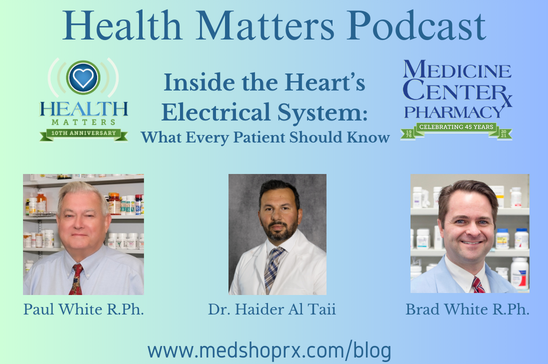
Inside the Heart’s Electrical System: What Every Patient Should Know

On this week’s Health Matters, pharmacists Paul White and Brad White welcomed Dr. Haider Al Taii of Aultman Deuble Heart & Vascular Hospital Cardiovascular Consultants to discuss disorders of the heart’s electrical system  .

Heart disease is often thought of as a “plumbing problem” — blocked arteries and reduced blood flow.

But many serious heart conditions are actually electrical problems.

Understanding the difference can help you recognize symptoms early and protect your long-term health.

🫀 The Heart Is an Electrical Organ

Your heart beats because of a precisely coordinated electrical signal.

  • The signal starts in the SA node (your heart’s natural pacemaker)

  • It travels through the atria

  • Then down to the ventricles

  • Creating the coordinated contraction we feel as a pulse

When that electrical system misfires, the rhythm becomes abnormal.

These abnormal rhythms are called arrhythmias.

Some are harmless.

Others can increase stroke risk or even become life-threatening.


Atrial Fibrillation (AFib): The Most Common Rhythm Disorder

One of the most discussed electrical disorders is Atrial Fibrillation (AFib).

What is AFib?

AFib occurs when the atria (the upper chambers of the heart) beat chaotically instead of in an organized rhythm.

Instead of a steady “lub-dub,” the heart may:

  • Flutter

  • Race

  • Skip

  • Or feel irregular

Symptoms to Watch For

AFib doesn’t always cause dramatic symptoms.

Some patients feel nothing at all.

Common symptoms include:

  • Palpitations

  • Shortness of breath

  • Fatigue

  • Dizziness

  • Chest discomfort

  • Reduced exercise tolerance

If symptoms are severe — especially chest pain, fainting, or extreme shortness of breath — emergency evaluation is appropriate.

Why AFib Is a Big Deal

AFib increases the risk of stroke.

Because the atria are not squeezing effectively:

  • Blood can pool

  • Clots can form

  • A clot can travel to the brain

That’s why blood thinners are often prescribed.

Why Blood Thinners Matter

Blood thinners (anticoagulants):

  • Reduce clot formation

  • Significantly lower stroke risk

  • Are often lifelong therapy depending on risk factors

If a patient cannot tolerate blood thinners due to bleeding risk, anemia, or frequent falls, alternative strategies may be considered — including device-based options.

Medication adherence is critical.

Missing doses can rapidly increase stroke risk.

Ventricular Tachycardia (VT): A More Dangerous Rhythm

While AFib starts in the upper chambers, Ventricular Tachycardia (VT) starts in the lower chambers.

VT is typically:

  • Faster

  • More unstable

  • Potentially life-threatening

Common causes include:

  • Prior heart attack

  • Scar tissue

  • Cardiomyopathy

  • Structural heart disease

Treatment options may include:

  • Medications

  • Ablation procedures

  • Implantable devices

Pacemakers vs. Defibrillators: What’s the Difference?

Many patients have questions about cardiac devices.

Pacemaker

Used when the heart beats too slowly.

  • Helps maintain a safe minimum heart rate

  • Improves symptoms like fatigue and dizziness

Implantable Cardioverter-Defibrillator (ICD)

Used when there is risk of life-threatening fast rhythms.

  • Detects dangerous rhythms

  • Delivers a shock if needed

  • Can save a life in seconds

Living With a Cardiac Device: Common Questions

Patients frequently ask:

Can I use kitchen appliances like microwaves?

Yes. Modern devices are shielded and safe around standard household appliances.

Can I exercise?

In most cases, yes — with physician guidance. Staying active is important.

Can I fly?

Yes. Travel is generally safe.

Can I get an MRI?

Many newer devices are MRI-compatible, but always confirm with your cardiologist.

Are there restrictions?

Avoid strong magnetic fields and always inform healthcare providers about your device.

Lifestyle Matters More Than You Think

While some rhythm disorders are not preventable, lifestyle still plays a powerful role.

Helpful modifications include:

  • Maintaining a healthy weight

  • Managing blood pressure

  • Limiting alcohol

  • Treating sleep apnea

  • Controlling diabetes

  • Staying physically active


Electrical problems are often influenced by metabolic and structural heart stress.

When Should You Seek Medical Attention?

Seek urgent evaluation if you experience:

  • Fainting

  • Severe chest pain

  • Sustained racing heart

  • Shortness of breath at rest

  • Stroke-like symptoms

Early intervention changes outcomes.

Final Takeaway

The heart is more than a pump.

It’s an electrical system that must fire in perfect sequence thousands of times a day.

If you feel:

  • Irregular beats

  • Unexplained fatigue

  • Racing episodes

  • Or new shortness of breath

Don’t ignore it.

Rhythm disorders are common.

They are treatable.

And early diagnosis can prevent serious complications.

Learn More

Dr. Haider Al Taii practices with Aultman Deuble Heart & Vascular Hospital Cardiovascular Consultants.

To hear the full discussion, listen to this episode of Health Matters with the Medicine Center Pharmacy  .

Thanks for listening today! We’d like to remind our listeners, if you suspect you have a medical issue, please contact your healthcare provider. Thanks to our sponsor Aultman Health System. As always, we thank our listeners for joining us on Health Matters with the Medicine Center Pharmacy. Have a healthy week and we’ll see you again next Friday right here on News Talk 1480 WHBC.

Heart Health Matters: Expert Tips from Dr. Mustafa Baldawi

Aultman Deuble Heart & Vascular Hospital is the largest group of board-certified cardiologists in Stark County. Their commitment is to deliver scientifically based diagnostic and treatment options.  

Our guest is Dr. Mustafa Baldawi with Aultman Deuble Heart & Vascular Hospital.

Here’s a blog post draft to promote the podcast interview:

Your heart is the engine that keeps you moving—so taking care of it should be a top priority! In the latest episode of Health Matters, we sit down with Dr. Mustafa Baldawi and the team from Medicine Center Pharmacy to discuss the key steps to a healthier heart. From diet and exercise to smoking cessation and managing risk factors, this conversation is packed with expert advice to keep your heart in top shape.

Key Takeaways from the Episode:

💙 Eat for Your Heart – Dr. Baldwin shares how a heart-healthy diet filled with fruits, vegetables, whole grains, and lean proteins can help lower cholesterol and reduce the risk of heart disease. Plus, tips on what to avoid!

🏃 Move More, Stress Less – Exercise isn’t just about weight loss—it strengthens your heart! We discuss how even small changes, like daily walks or simple strength training, can make a big difference.

🚭 Quit Smoking, Gain Years – Smoking is a major risk factor for heart disease, but quitting can drastically improve your health. Get the motivation and resources you need to kick the habit for good.

🩺 Know Your Risks – High blood pressure, diabetes, and genetics all play a role in heart health. Learn how to monitor and manage these factors with the help of your healthcare team.

Don’t miss this insightful and empowering episode! Tune in now to Health Matters and take charge of your heart health today.

Have questions or need support? Stop by Medicine Center Pharmacy, where our team is always ready to help you on your journey to better health!

Rewatch the Youtube Livestream Here:

LIsten to Podcast Stream Here:

Thanks for listening today! We’d like to remind our listeners, if you suspect you have a medical issue, please contact your healthcare provider. Thanks to our sponsor Aultman Health System. As always, we thank our listeners for joining us on Health Matters with the Medicine Center Pharmacy. Have a healthy week and we’ll see you again next Friday right here on News Talk 1480 WHBC.

Heart Health Month with the American Heart Association

The American Heart Association was founded by 6 cardiologists in 1924 and has become the nation’s oldest and largest voluntary organization dedicated to fighting heart disease and stroke. Heart disease is the number one killer worldwide, and stroke ranks second globally. Even when those conditions don’t result in death, they cause disability and diminish quality of life. The AHA wants to see a world free of cardiovascular disease and stroke. February is Heart Month and we all have the power to take action to protect ourselves against heart disease. 

In this episode, you will learn the answers to the following questions:

  1. What is the significance of Heart month?

  2. What is the difference between a heart attack and cardiac arrest?

  3. What are the symptoms of a Heart Attack?

  4. Do the symptoms of heart attack differ between men and women?

  5. What is CPR and what does it stand for?

  6. What does it mean to “know your numbers?”

  7. How can I take action to improve my heart-healthy numbers?

Thanks for listening today! We’d like to remind our listeners, if you suspect you have a medical issue, please contact your healthcare provider. Thanks to our sponsor Aultman Helath System. As always, we thank our listeners for joining us on Health Matters with the Medicine Center Pharmacy. Have a healthy week and we’ll see you again next Friday right here on News Talk 1480 WHBC.

Take Up A Heart Healthy Habit

How We Keep Our Heart Healthy?

Health Matters with the Medicine Center Pharmacy. I’m your pharmacist, Paul White. We’re glad you joined us. Before we begin, I’d like to thank our sponsors, Aultman Health Systems, Studio Arts & Glass, and Jenior Appraisals and Liquidations.

Today Brad White and I are broadcasting from our administrative offices and our guest is Dr. Ataul Qureshi, Cardiologist at Aultman Deuble Heart & Vascular Hospital, and Cardiovascular Consultants.

February is American Heart Month.  Why do we observe American Heart Month every February? Well, every year more than 600,000 Americans die from heart disease. The number one cause of death for most groups, heart disease affects all ages, genders, and ethnicities. Risk factors include high cholesterol, high blood pressure, smoking, diabetes, and excessive alcohol use. This year’s Heart Month theme is Take up a Heart Healthy Habit. You can pick a new heart-healthy habit like jogging or substituting sodas with water and try to stick to it for a whole month.

We would like to challenge you to a very important heart health habit:  Understand your medication and take it as prescribed.  Did you know that nationally only 30% of patients take their blood pressure medications correctly? 

If you struggle with taking your medication correctly, let us help you manage your medication refills and pack them in individual dose packs to help you follow one of the most important health habits – taking your medication correctly! 

We’d like to remind our listeners that today’s program is also available on our podcast which can be downloaded from the app store on your mobile phone. Look for Health Matters with the Medicine Center Pharmacy and you can listen to any of our programs, anytime.

Also, Listen to the Episode on your Favorite Podcast Platform


How to maintain a healthy heart habits?

  • Eat Healthy Foods

  • Maintain a Healthy Weight

  • Completely Quit Smoking

  • Stay Away from Secondhand Smoke

  • Control Cholesterol and Blood Pressure

  • Drink Alcohol in Moderation

  • Manage Stress

  • Get Physically Active

  • Taking Medicine to Lower the Risk of Heart Attack and Stroke

Tune in to Learn More About the Heart Healthy Habit:

  • What is congestive heart failure?

  • What are some common conditions that lead to heart failure?

  • Who is typically at risk for heart failure?

  • Are there measures people can take to prevent heart failure and cardiac disease in general?

  • What are the common signs of heart failure and are they the same for men and women?

  • Is it more common for women to overlook symptoms than men?

  • What happens if a pregnant woman has hypertension?

  • How does smoking lead to heart failure?

  • Does vaping have the same effects as cigarettes?

  • What about those affected by secondhand smoke?  Do these people commonly have issues?

  • What are some of the latest developments in heart failure diagnosis and treatment?

  • Which developments have had the most impact on the patients?

Thank you to our guest, Dr. Ataul Qureshi, Cardiologist at Aultman Deuble Heart & Vascular Hospital, and Cardiovascular Consultants. We would like to remind our listeners if you suspect you have a medical issue, please contact your healthcare provider. Thanks to our sponsors Aultman Health Systems, Studio Arts & Glass, and Jenior Appraisals and LIquidations. As always, we thank our listeners for joining us on Health Matters with the Medicine Center Pharmacy.

Have a healthy week and we’ll see you again next Friday right here on News Talk 1480 WHBC.

FDA-Approved White’s Premium Vitamins and Supplements

LATEST POSTS