
On this week’s Health Matters with the Medicine Center Pharmacy, we welcomed Allen Bresson, Physical Therapist, and Jeff Teeple, Physical Therapist Assistant from Aultman North Therapy Services to discuss how to prevent, recognize, and treat back injuries effectively.
Read More
March is Colorectal Cancer Awareness Month, a time dedicated to increasing awareness about screening, prevention, and treatment of one of the most common cancers in the United States. On this week’s Health Matters Radio Show and Podcast, pharmacists Paul White and Brad White of Medicine Center Pharmacy welcomed Dr. Marta Lavery of Aultman General Surgery to discuss the importance of colorectal cancer screening and early detection.
Read More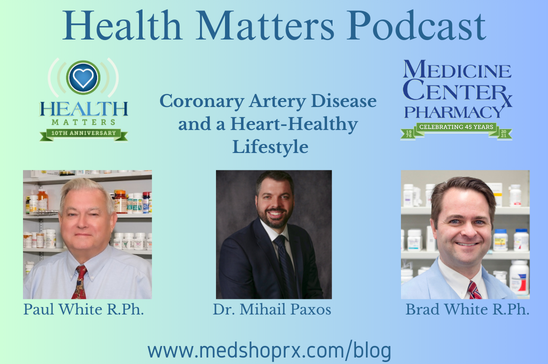
Heart disease remains the leading cause of death in the United States—but the good news is that many forms of heart disease are preventable with early detection, medical management, and lifestyle changes.
On this week’s Health Matters Radio Show, we sat down with Mihail T. Paxos, MD, cardiologist at Aultman Deuble Heart and Vascular Hospital, to discuss coronary artery disease (CAD) and what patients can do to protect their heart health.
Read More
The holidays are often described as the most wonderful time of the year—a season filled with family, traditions, and celebration. But for anyone grieving the loss of a loved one, this time of year can be overwhelming, emotional, and even painful.
Read More
In our latest Health Matters podcast episode, we sat down with the wonderful Hollie Stefaniak, RN, CRRN from Aultman Woodlawn to dive deep into something we all need more of—self-care. Whether you’re a busy parent, full-time student, or just someone juggling life’s to-do list, Hollie reminds us that taking care of ourselves isn’t a luxury—it’s a must.
Read More
Catch the full Health Matters episode featuring Dr. Devillier to hear more insights and helpful health tips. Whether you’re 30 or 70, your health is worth the investment.
Read More
Dr. McKeen is a board-certified primary care sports medicine physician, and he’s also the team doctor for the University of Mount Union (go Raiders!).
Read More
With May being Mental Health Awareness Month, this episode serves as a timely reminder that mental health deserves just as much care and attention as physical health. Renee and Molly explain what makes IOP unique, how patients can begin treatment, and the important role family members can play in the healing process.
Read More
May is National Stroke Awareness Month—a time dedicated to educating the public about stroke prevention, recognizing the signs and symptoms, and supporting survivors and caregivers
Read More
We’re thrilled to welcome Jenna Davison, Registered Dietician at Aultman Hospital, to the mic! 🥗 Jenna brings the perfect combo of expert knowledge and practical advice to the table. Whether you’re a total nutrition newbie or just looking to level up your wellness routine, this episode is for you.
Read More
Is back pain holding you back from enjoying life to the fullest? You’re not alone, and there’s hope on the horizon! Aultman’s Back and Spine Center, dedicated to helping you reclaim your active lifestyle. Whether it’s a sports injury, arthritis, or just the wear and tear of daily life, Aultman’s comprehensive care team is here to support you every step of the way.
Read More
Aultman General Surgery specializes in general surgery with a wide scope of procedures, including the latest in robot-assisted surgeries, for the highest level of comprehensive surgical care.
Read More
Aultman Deuble Heart & Vascular Hospital is the largest group of board-certified cardiologists in Stark County. Their commitment is to deliver scientifically based diagnostic and treatment options.
Read More
Join the Medicine Center Pharmacy Podcast as we chat with Dr. John Elias from Aultman Now Urgent Care Center in Canton, Ohio. Together, we’ll explore the latest in urgent care services, what patients can expect during their visit, and how Aultman Now is making high-quality healthcare more accessible than ever.
Read More
November is Lung Cancer Awareness Month, a time dedicated to shining a light on one of the leading causes of cancer-related deaths worldwide.
Read More
October is Breast Cancer Awareness Month, a time dedicated to raising awareness about breast cancer, celebrating survivors, and highlighting the importance of early detection. Breast cancer is one of the most common cancers among women, affecting one in eight throughout their lifetime. However, with timely screenings and advances in treatment, survival rates continue to improve.
Read More
Pain management is a specialized medical approach aimed at treating chronic or severe pain. The doctors at Aultman Pain Management help patients control and alleviate pain using various treatments and therapies. Dr. Rogers and Dr. Dallara join us on Health Matters.
Read More
Urology plays a crucial role in maintaining both men’s and women’s health. From prostate issues and kidney stones in men to bladder control and UTIs in women, urologists provide essential care across a wide range of conditions. If you have any concerns about your urological health, don’t hesitate to consult a urologist. Early diagnosis and treatment can significantly improve your quality of life.
Read More
Dr. Brian Krusemark will be talking about men’s health today.
Read More